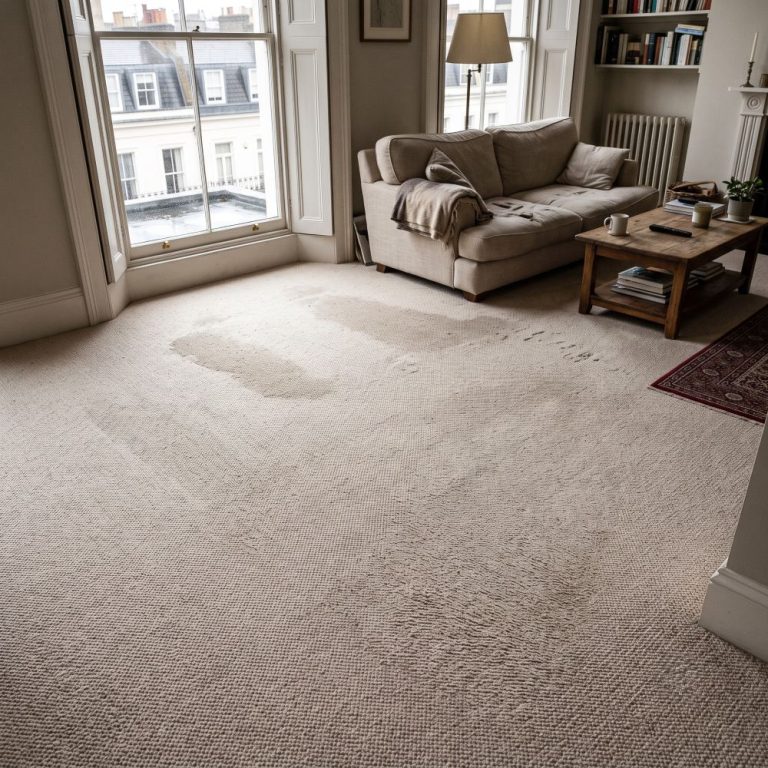
Every autumn I clean carpets for tenants who are about to hand back keys, and every autumn a handful of them ring me afterwards to say the deduction went ahead anyway. That is the part nobody mentions when they tell you to get the carpets done. A clean is evidence of effort. It is not a receipt against a deduction, and the two get confused constantly. Whether you should pay me before check-out or let the landlord’s contractor come in afterwards and argue about the bill depends almost entirely on what was written and photographed on the day you moved in – and in a fair number of London tenancies, that paperwork does not exist in any useful form.
What can a landlord lawfully take out of your deposit for carpets?
The Tenant Fees Act 2019 made blanket clauses requiring a tenant to arrange or pay for professional cleaning unenforceable in England, and the ban covers effectively all assured shorthold tenancies from 1 June 2020, whenever the agreement was originally signed. Plenty of agreements still print the clause. Plenty of agents still cite it at check-out with complete confidence.
What survives is the condition obligation. A tenant can be required to return the property to the standard of cleanliness recorded at check-in, and where carpets come back soiled beyond fair wear and tear the landlord may deduct a reasonable cost supported by evidence of the deterioration. The distinction is between owing a standard and owing a contract with a cleaning company. You owe the standard.
Where the “professionally cleaned with receipt” clause stands now
It stands nowhere. A demand for an invoice from a company as a condition of returning your money is a prohibited payment dressed as a housekeeping requirement, and every adjudicator at the three schemes knows it. Say so in writing, keep it civil, and confirm you will return the carpets to their check-in condition. A tenant in Walthamstow did exactly that last March, got a snotty email back from the agent, and had her full deposit within three weeks because the check-in photographs showed a carpet that was already grey along the hallway when she arrived.
Does cleaning before check-out do anything an adjudicator can see?
Sometimes, and less than people hope. Adjudication is a documents exercise. Nobody visits the flat. The decision gets made on the check-in report, the check-out report, photographs, and whatever correspondence both sides supply.
A carpet cleaning invoice tells the adjudicator that money was spent. It says nothing about the state of the carpet afterwards, which is the only thing under dispute. What shifts a decision is a check-out report describing clean carpets, or your own dated photographs taken in daylight after the clean, from the same corners and angles as the check-in photographs.
What the invoice has to say to count for anything
Mine say the address, the date, the rooms treated, the method, and a line noting any areas where soiling could not be removed. That last line is the one tenants ask me to leave off and the one that helps them most, because it converts a permanent stain into a documented pre-existing defect rather than something you failed to deal with. An invoice reading “carpet cleaning – £120” has done nothing for anybody.
The same applies to the check-out clerk’s wording. Ask for a copy of the report rather than waiting for the agent to summarise it, because “carpets cleaned to a good standard, light residual marking noted at check-in” and “carpets require attention” produce entirely different outcomes from the same floor.
What happens if you leave it and let the landlord clean afterwards?
The landlord instructs a contractor, pays the bill, and proposes the sum as a deduction. If you accept, that is the end of it. If you dispute, the scheme’s free adjudication service takes it, and the timeline runs somewhere between two and ten weeks depending on the scheme and how quickly the landlord submits evidence.
Adjudicators reduce these claims often. The common reasons are that the sum exceeds a reasonable market rate for the work, that the check-in evidence was too thin to establish the original condition, or that the claim is for the whole property when only one room was at issue. A £340 invoice for a two-bedroom flat in Tooting came back at £95 last year because the check-in inventory described the carpets as “fair, some marking” and offered no photographs at all.
The gamble in waiting is the money sitting still. Deposits under dispute stay with the scheme until the decision comes, so a tenant who needs that money for the next place is choosing between a £120 clean now and an uncertain sum released in six weeks. That timing question decides more of these cases than the legal position does, and landlords with a decent grasp of it will propose a deduction slightly below the cost of fighting it.
The depreciation sum that decides the big ones
Where the claim is for replacement rather than cleaning, the maths changes entirely. Adjudicators work on the residual life of the item. A mid-range carpet is treated as having a useful life of somewhere between eight and ten years. If it was six years old when you damaged it and costs £900 to replace, the landlord has lost three or four years of value, and the award reflects that fraction rather than the full replacement price. Betterment is the principle – nobody gets a new carpet at a tenant’s expense.
This is why a badly stained old carpet is a smaller problem than tenants assume, and a damaged new one is a much bigger one than they expect.
Which carpets are worth cleaning before you leave, and which are already lost?
The honest sorting takes about a minute on your knees.
Carpets worth doing: anything under five years old with general soiling, traffic lanes, and a few spills. This is the bulk of London rental carpet and it responds well. Hot water extraction on a five-year-old polypropylene in a flat in Ealing lifts the grey out of the hallway and takes the argument off the table entirely for £110 or so.
Carpets not worth doing: anything with cellulosic browning already showing at the edges, anything where the pile has walked flat and lost its twist, anything with old bleach spots or a pet contamination that has reached the underlay. A clean on those returns a slightly darker version of the same tired floor covering, and you have spent £140 to change nothing an adjudicator would notice.
Here is where I talk myself out of work. If the carpet is eight or nine years old, the check-in report is vague, and there are no check-in photographs, my honest advice to most tenants is to vacuum thoroughly, spot-treat what will lift, photograph everything, and keep the money. The likeliest outcome of a dispute on a carpet that age is a small award or none, and it will cost you less than my invoice. Agents hate this advice. Several have stopped recommending me over it, which tells you who was benefiting from the alternative.
What changes the sum is the quality of the record at both ends of the tenancy. Where the check-in photographs are detailed and the carpet was clean when you got it, the clean before check-out is straightforward value: you are returning a documented condition and the argument never starts. Where the record is thin, the landlord carries the burden of proving the carpet deteriorated on your watch, and paying to clean it hands over evidence that it needed cleaning.
Which marks get written off as fair wear and tear
Traffic lanes down a hallway, flattening in front of a sofa, fading along a south-facing bay – none of that is chargeable, and adjudicators say so repeatedly. Wear is what carpet does when people live on it. The chargeable category is damage and soiling: a curry down the middle of a bedroom, candle wax pressed into the pile, a scorch ring from a hair straightener, cat contamination in a corner. Tenants routinely pay to have wear cleaned, which does nothing for it, and then leave the one chargeable mark untreated because it looked too difficult.
The exception is contamination you can smell. Urine, in particular, gets found at check-out by a clerk with a working nose, and it produces the largest deposit deductions I see because it justifies underlay replacement rather than cleaning. Deal with that one properly and early, over two visits, and get the treatment written on the invoice.
How should the clean be timed around the inspection?
Two full days before the check-out appointment, with the heating on and the windows cracked. A carpet cleaned the same morning reads damp on the clerk’s moisture meter, looks darker than it will once dry, and invites a note about dampness in the report that is worse than the soiling it replaced.
Two days also gives you room for a wicked stain to reappear and be dealt with before anyone official sees it. Something that soaked into the backing years ago can travel back up as the pile dries, and it always chooses the middle of the sitting room.
The order of operations in the last week
Clean carpets last, after the furniture is out and the walls are done. I have arrived at flats in Hornchurch and Bow to find carpets already cleaned, then had to watch a removals team drag a wardrobe across them the following morning. Get the van loaded, get the flat empty, then get the carpets done, then photograph them, then hand back the keys. A tenant in Teddington sent me her sequence of shots from that final morning – empty rooms, daylight, one per corner – and the agent withdrew a £200 proposal within four days of receiving them.
The photographs did that. The clean made the photographs worth taking, which is a different claim from the one the cleaning trade usually makes for itself.