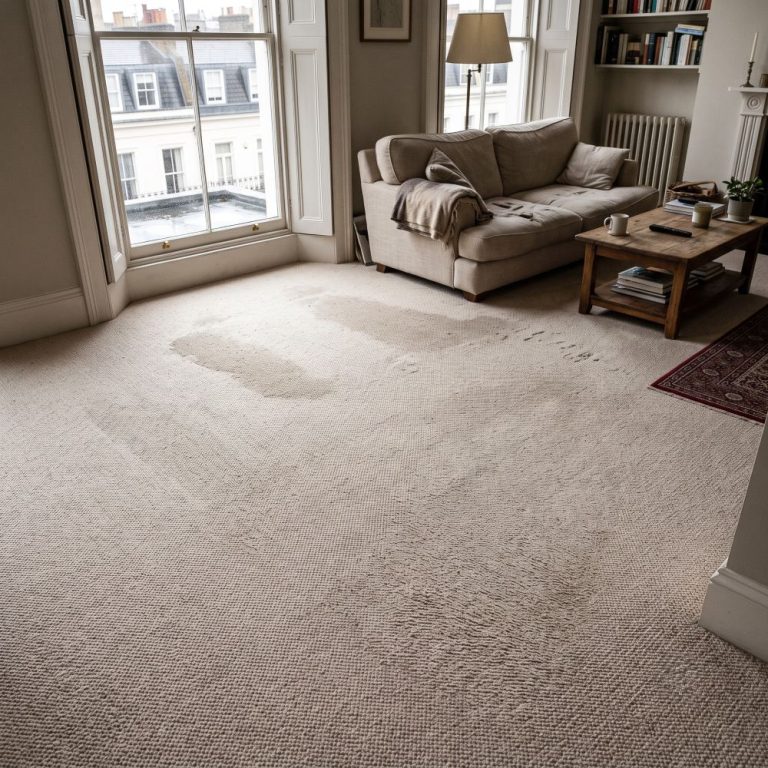
A woman in Winchmore Hill rang me two springs ago with two pieces of paper in front of her for the same through-lounge. One said £70. The other said £280. Same carpet, same room, same week, both firms carrying a few hundred reviews between them. She wanted to know which one was lying to her. Neither was, particularly. Gaps of that size are ordinary in London domestic carpet cleaning, and they get decided before anyone has knelt down and looked at the pile – in how the room gets counted, what the cleaner assumes about your furniture, whether he charges VAT, and how far he has to drag a hose from a legal parking space.
What is the cheap quote pricing – the room, or the carpet?
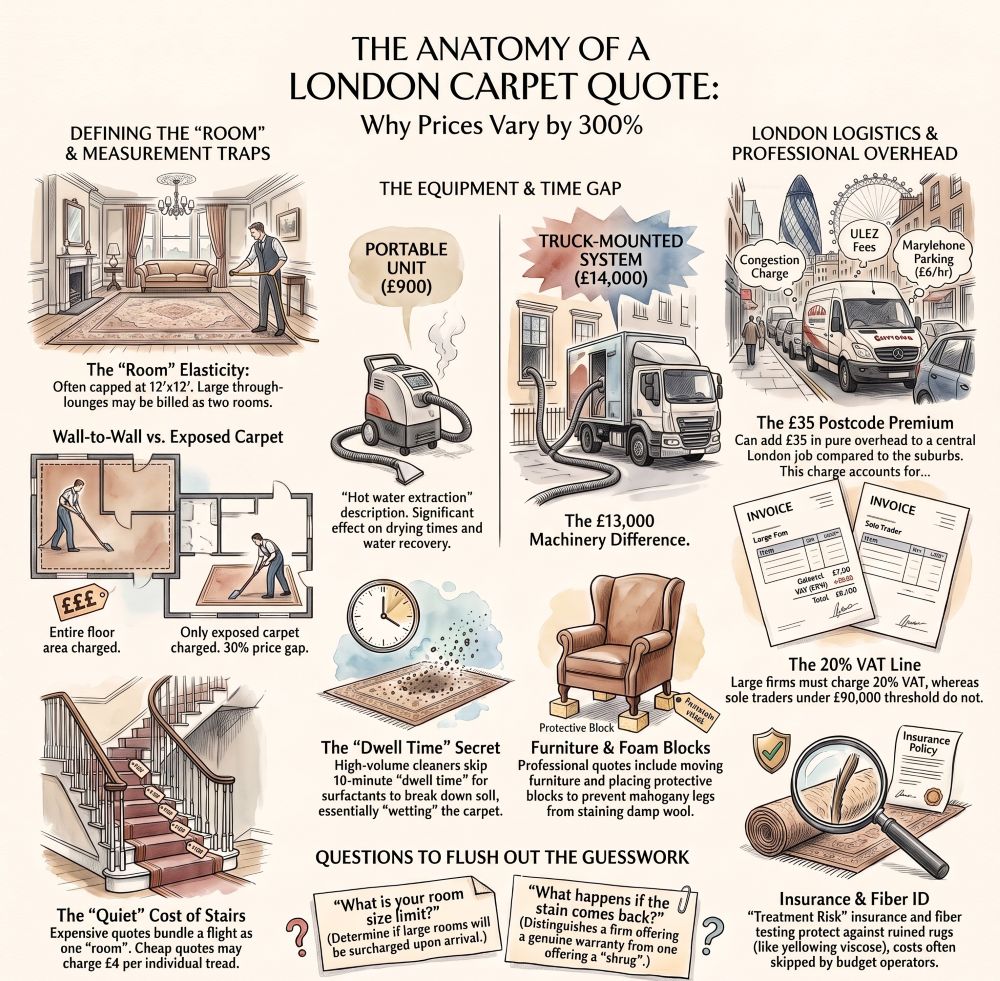
The word “room” carries an enormous amount of weight in a telephone quote, and almost none of it is defined. Most low-end pricing runs on a room rate capped at something like twelve foot by twelve, which nobody mentions on the phone. Her through-lounge was twenty-two feet long. Under the cheaper firm’s own terms it was two rooms, so the £70 was already £140 before anyone arrived, and she had no way of knowing that from the number on the paper.
Stairs are the other quiet one. A straight flight of thirteen is often folded in as “a room” by the expensive quote and charged per tread by the cheap one. Fourteen treads at £4 is £56 for twenty-five minutes of work on your knees with a hand tool, which is the least pleasant part of the day and the part people most often forget to ask about.
Where the square-metre trap opens up
Square-metre pricing looks like the honest alternative and mostly is, though it invites its own dodge. A cleaner quoting £4.50 per square metre measures the room wall to wall. Another quoting £6 measures the exposed carpet only and walks around the sofa, the bed, the wardrobe. On a small bedroom in Kensal Rise those two methods can land within a few pounds of each other while looking 30% apart on the sheet. Ask which measurement the figure is based on and half the mystery dissolves on the spot.
Why does the same method produce two different prices?
Both firms will say hot water extraction. That phrase covers a machine costing £900 and a machine costing £14,000, and it covers a cleaner who pre-sprays and waits, and one who wets and sucks in a single pass.
The physical difference is heat held at the jet, vacuum recovery in inches of mercury, and solution pressure. A portable unit run properly on a two-bedroom flat gives a result most people cannot distinguish from truckmount work six weeks later. What it cannot do is recover water as aggressively, so the carpet stays damp longer – seven hours rather than three, more if the flat faces north and the windows stay shut.
The truckmount premium and where it stops earning its keep
Here is where I depart from most of my trade: on a first-floor flat in Herne Hill with two rooms of polypropylene, the truckmount premium buys you very little beyond a faster dry, and firms charge 40% more for it as though it were a different service. On a wool Wilton in a six-bedroom house, or on a commercial floor where the building reopens at seven, it earns every penny. The equipment is worth paying for when the volume of water or the drying deadline demands it. Pay it for a bedroom in a converted terrace and you have bought a badge on the side of a van.
Does your postcode change the price before anyone sees the carpet?
Yes, and by more than most customers expect. A van working inside the Congestion Charge zone carries £15 a day before the first job, plus ULEZ where the vehicle is non-compliant, plus a parking bay that in Marylebone can run past £6 an hour. A three-hour job in a mansion block off Baker Street therefore carries £35 of pure overhead that the identical job in Chessington carries none of.
Access compounds it. Third floor, no lift, two hundred feet of hose up a stairwell, a caretaker who wants a permit and a copy of your public liability certificate. That is forty minutes of setup and forty of breakdown, and the fair price includes it.
Parking, permits and the twenty minutes nobody bills for
Suburban quoting is cleaner because suburban parking is. Out in Upminster the van sits on the drive, the hose runs eighteen feet, and the whole job takes ninety minutes door to door. The same two rooms in Wapping take two hours forty. When you compare quotes across London you are frequently comparing a company priced around outer-borough logistics against one priced around inner-London ones, and the outer firm may well decline the central job anyway once it sees the postcode.
What has the expensive quote priced in that the cheap one has dropped?
This is where the real money sits, and it is mostly invisible until the appointment.
Furniture first. A technician who shifts a three-seater and a sideboard, cleans underneath, then sets foam blocks under the feet so mahogany legs do not bleed stain into damp wool has added twenty-five minutes to the room and taken on a real risk of damaging something expensive. Most low-end quotes assume clear floors and clean around whatever is standing there, which nobody mentions until the technician is in the doorway. You then get the choice of paying an extra £30 a room on the day or living with a clean carpet that has a dark rectangle under the bed and a tidemark where the wardrobe sits.
Then chemistry and time. The pre-spray, the dwell time and the rinse are the three things that separate a clean from a wetting, and dwell time is the easiest to skip because it looks like standing about. Ten minutes for the surfactant to break the greasy binder holding soil to the fibre, then extraction at temperature. A firm running six jobs a day cannot afford those ten minutes six times over. A firm running three can, and prices accordingly.
Pet urine deserves its own paragraph because it is the single biggest cause of a quote being wrong. Urine passes through the carpet, through the underlay, and into the floorboards, where it crystallises and reactivates in humid weather. Surface cleaning it makes the smell worse for about a fortnight. A proper repair means the carpet comes up, sections of underlay go in the skip, the boards get sealed, and an enzyme goes down that wants hours of contact time before it has done anything at all, and that is a £300 job on one bedroom before anyone touches the rest of the house. A cheap quote given over the phone has priced none of it, because the customer described it as “a bit of a smell in the corner”.
Insurance is the line customers never ask about and should. Public liability at £2m and treatment risk cover – the policy that pays when a carpet shrinks or a dye migrates – costs a sole trader somewhere around £400 to £600 a year. Plenty of cheap operators carry the first and not the second, which means the cover excludes the exact thing most likely to go wrong.
Fibre identification matters more than any of it. Viscose looks like silk, sells as “art silk”, turns yellow-brown and crusty the moment it gets wet, and appears in a startling number of rugs and stair runners sold in London since about 2015. A cleaner who tests a fibre before choosing a method is protecting you from a £900 replacement. A cleaner quoting a flat room rate over the phone has not tested anything, and viscose is the fibre where that costs a customer real money rather than a disappointing afternoon. I have been called to two rugs in the last year that were ruined by hot water and a cheerful lack of curiosity, both of them in flats where the tenant was trying to protect a deposit.
The VAT line that explains a fifth of the gap
A sole trader under the £90,000 threshold charges no VAT. A firm with three vans and an office is well over it and adds 20% to everything. On the Winchmore Hill quotes that accounted for roughly £47 of a £210 difference, and it buys the customer nothing at all in cleaning quality. It does mean the larger firm has an office, a landline someone answers, and the capacity to send another technician when the first one calls in sick.
How do you tell an underpriced job from a good one?
A cheap quote is sometimes correct. Two small bedrooms of nylon, clear floors, ground floor, off-peak Tuesday in Chessington – £80 is a fair price and anyone charging £240 for it is reading your postcode rather than your carpet. I have talked people out of booking me on jobs like that, and told them a hired machine and an afternoon would do.
What the cheap number cannot survive is complication. Wool, urine, viscose, an eleven-year-old carpet in a rented flat where the letting agent wants a receipt with a company name on it and a date that matches the check-out report.
The tell sits in the questions. A quote arrived at after somebody asked about fibre, dimensions and what happened in that corner is a price. Everything else is an opening bid.
Questions that flush out the guesswork
Four of them, on the phone, before you commit. What is your room size limit? Does the price include moving furniture? Are you VAT registered? What happens if the stain comes back? The last one separates a warranty from a shrug. Anyone quoting a fixed price without asking about fibre type, room dimensions or previous treatments is quoting an average and will adjust it on the day, in your hallway, while you stand there in your socks with the sofa already pushed into the kitchen.
That adjustment on the day is the one thing both ends of the market share, and it is why the paper number matters less than the questions asked before it was written.